Foodborne Illnesses
What You Need to Know
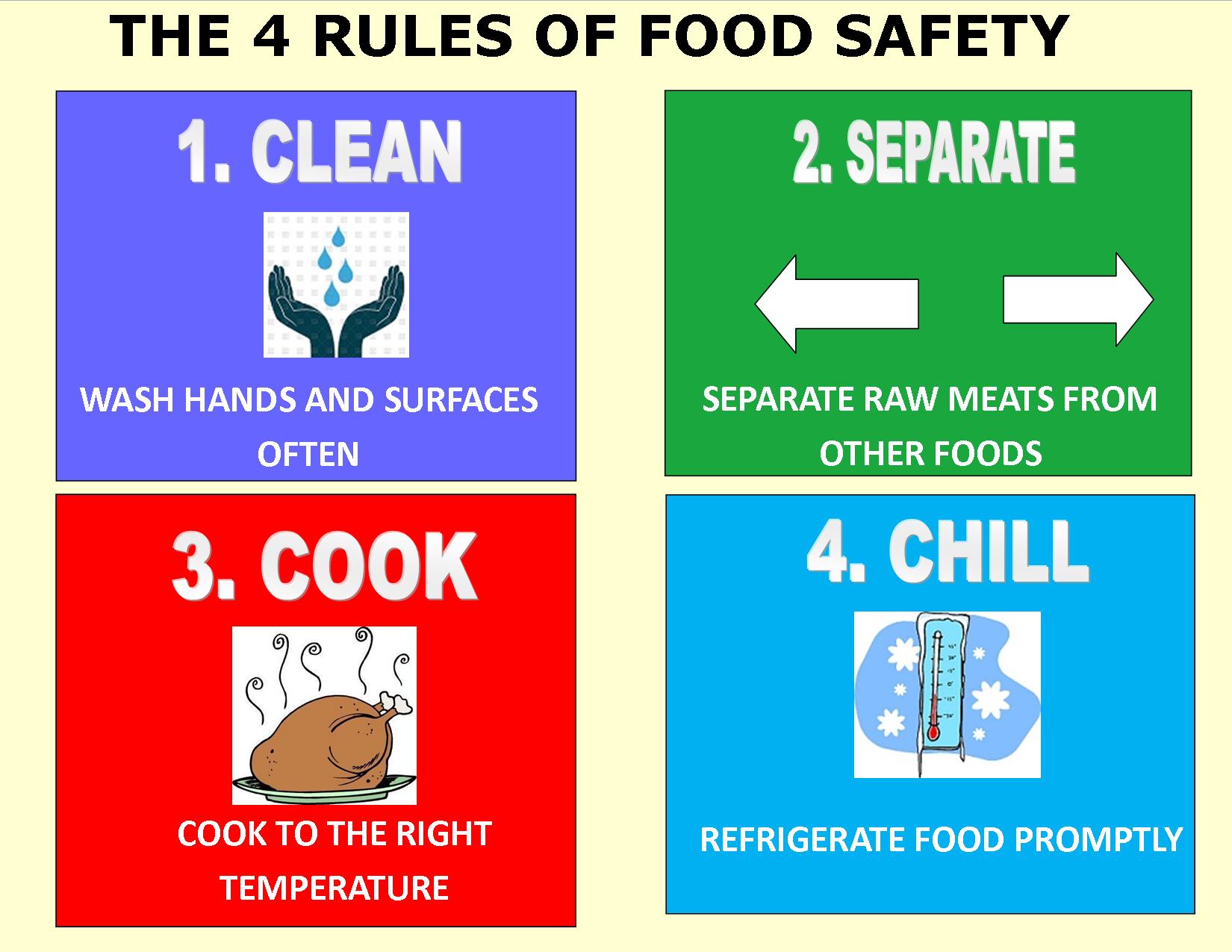 Keep food safe! Give bacteria no chance!
Recent Recalls & Outbreaks
Summertime Food Safety Tips
- Keep cold foods cold and hot foods hot!
- Refrigerate leftovers as soon as possible, but definitely within 2 hours.
- Thaw frozen food in the refrigerator or microwave. Never thaw frozen foods on the counter.
- Wash your hands and utensils before and after handling food. Humming the "Happy Birthday" song twice is a good way to ensure you are washing long enough.
- Scrub cutting boards with hot, soapy hot water after preparing each item and before moving on to the next food.
- Cover any cuts or abrasions on your hands to avoid contaminating the food.
- Keep raw and cooked foods separate.
 Learn more about safe food handling during the summer season(PDF, 143KB).
Becoming a Safer Shopper
- Check “sell-by” and “use-by” dates. Do not buy products that are out of date.
- Do not buy or use damaged, swollen, rusted, or dented cans.
- Choose unbruised fruits and vegetables.
- Do not eat “self-serve” foods or free food samples.
- Do not buy or use cracked or unrefrigerated eggs.
- Pick up frozen and refrigerated items just before you check out at the grocery store.
- Refrigerate groceries right away, and never leave perishable foods out for more than 2 hours.
- Separate raw meat, poultry, and seafood from other items in your shopping cart and in your grocery bags.
Dining Out
- Go out to eat early to avoid large crowds. Busier restaurants may be more likely to make a mistake with your food.
- Always ask that your food be prepared fresh.
- Avoid high-risk food sources, such as salad bars, delicatessens, buffets, potlucks, and street food vendors.
- Do not eat raw fruits or vegetables (i.e. salads) when eating out since you cannot be sure that these foods were properly washed.
- Avoid “fresh-squeezed” juices; always ask if juices are pasteurized.
- Ask if pasteurized eggs are used in dishes containing egg.
- When taking food to-go, always put the food in the to-go container yourself instead of having the server do it for you.
Foodborne Germs

For a more complete list of foodborne germs, see the Foodborne Illness A-Z Index.
Bacteria, virus or parasite? Check the list of foodborne germs and illnesses by type.
Contact Us
1120 South Dora
Ukiah, California 95482
Phone: (707) 472-2600